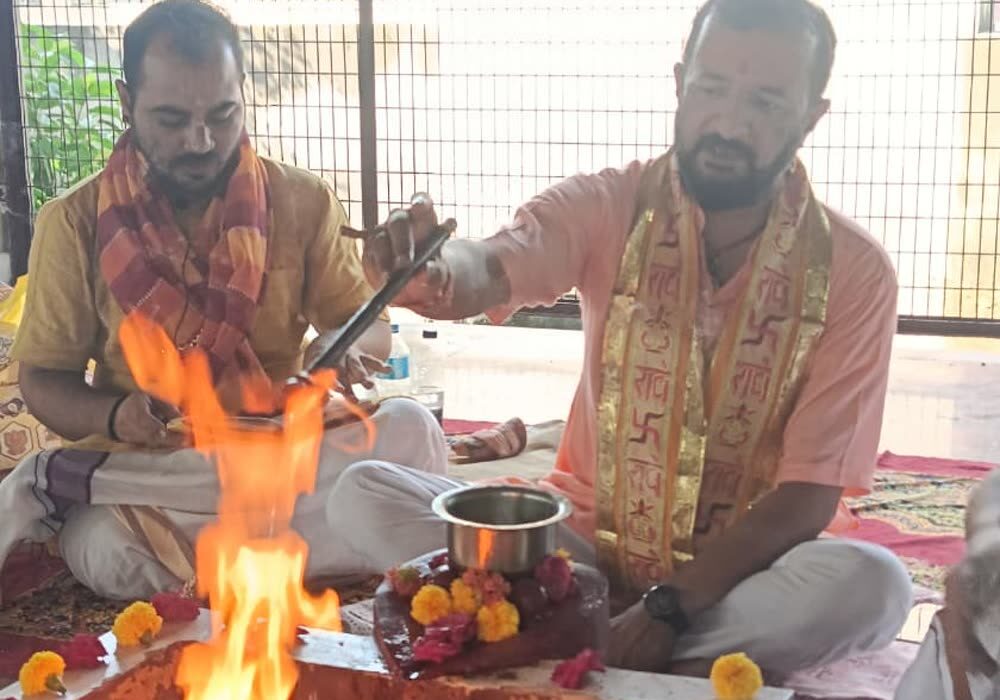
For two weeks each autumn, in India and wherever the tradition is kept, families perform the rites for the people of their line who have passed away. In 2026 the fortnight opens on 26 September and closes on Saturday 10 October with Sarva Pitru Amavasya, the new moon on which the rites can be made for every ancestor at once, including the ones whose names have been lost.
On that day a Brahmin in Vrindavan performs the rites for one family line at a time. You are welcome to have it done for yours. Whatever your background, wherever you live, the rites can be performed for the line you come from, and the names you remember are enough, because this day is kept for the forgotten ones too.
Anyone in your family who has died may be named. A parent or a grandparent, and equally a brother or sister, a son or daughter. The rites are made for your own family, whoever they are, of any generation.
A partial list is enough. The ordinary rites of the fortnight are made for three generations, parents, grandparents and great-grandparents. They are for the women of your family as much as the men: your mother, your grandmother, your great-grandmother, and any departed woman of the line, named alongside the fathers and given her own goods.
This last day is the exception, and it is why it is the day we keep. The sankalpa is made for every departed soul of the family, back through generations nobody now counts, including the ones whose names are lost.
What follows is the tradition itself: when the fortnight falls and why two dates can both be right, the five rites and what each one is for, and what the oldest texts actually say.
Most observances in the Vedic year face the gods. This one faces your own family. Pitru Paksha, the fortnight of the fathers, is the season in which a household turns to its ancestors by name, and it rests on some of the oldest ritual text the tradition holds.
The lamps on the Yamuna, after dark
The rites are performed in the morning. That evening, after sunset, there is a second observance on the river: Deep Daan, the giving of lamps. Hundreds of small earthen lamps are lit at the ghat and set on the water of the Yamuna.
There is no separate sankalpa for it and no separate booking. It is performed for every family whose puja and tarpan were done that morning, their ancestors together, and it is included in the $864. In his own words: the departed sees the light in the dark, and the path is lightened.
Last year, I began participating in yagyas for my departed family members. Over time, these rituals brought a sense of peace and clarity to my mind.
A year later, I found myself meeting someone who felt truly suitable for me. Before that, I had experienced unhealthy relationships and met people I could not wholeheartedly accept.
For me, performing yagyas and remembering our departed loved ones has been a way of finding peace, healing, and a better direction in life. I believe that when we honour those who came before us with sincerity, it can help us find greater clarity within ourselves and move toward a better path.
by A.M.
What we perform on 10 October
On Sarva Pitru Amavasya 2026 we perform the ancestor rites in Vrindavan for the families who book by 7 October. This is the one rite in our year built family by family rather than name by name:
Traditionally, families use these two weeks to observe the importance of the family members who have passed on. And on Sarva Pitru Amavasya, the rite can be expanded to be performed for every ancestor at once, including all the names you may or may not remember.
Honor your ancestors. Give us the names, and we will take care of the rest.
The ancestor rites · Sarva Pitru Amavasya
- A designated Brahmin for your family. One Brahmin performs your family's rites, yours alone, start to finish.
- Your family, by name. One booking covers one family line, up to ten names read in the sankalpa. Anyone in your family who has died may be named: a parent, a grandparent, a brother or sister, a son or daughter. A partial list is enough: on this one day the sankalpa is made for every departed soul of the family, including those whose names are lost.
- All five rites: pind daan, tarpan, the Yagya, brahman bhoj, and shayya daan given in your family's name.
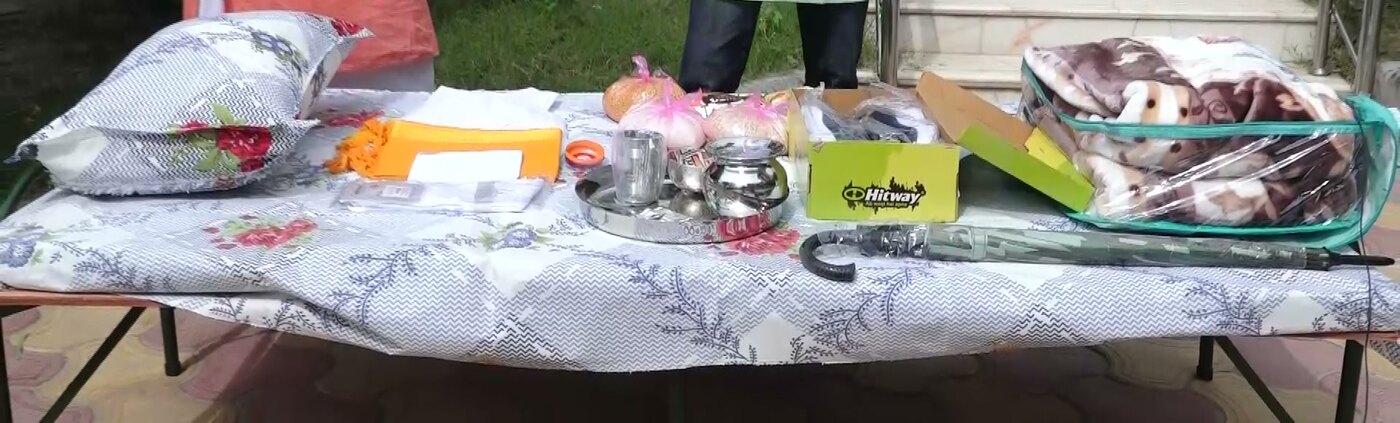
- What is given in your family's name. To a Brahmin, in your ancestors' name: a single bed with mattress, sheet, pillow and blanket; an umbrella and a pair of shoes; five garments and a janeu, the sacred thread; five utensils; five white foods, salt, sugar and rice among them; and a silver coin. For the women of your family, their own set: five garments, a silver chain and a pair of shoes. Each item is for a need on the road the departed are said to walk: the umbrella for the sun on that road, the shoes for the rough ground, the bed to rest on, the vessels to eat from, the coin for wealth. The Brahmin who receives them stands in the place of your ancestors at the rite, and the tradition holds that what he receives, they receive.
- The Deep Daan on the river, after sunset. That evening lamps are floated on the Yamuna for every family whose rites were performed that morning. It is included in the $864, at no extra charge.
- The complete recording, yours to keep. Your family's portion filmed so each thing done can be seen, the names audible, the fire visible.
Bookings for 10 October 2026 are closed.
And if this year is simply one to let pass, the fortnight is kept every year, and we keep this page's dates current.
The tradition behind the day
When it falls, and why two dates can both be right
The fortnight runs from the full moon to the new moon of one lunar month. In the southern reckoning that month is named Bhadrapada; in the northern reckoning, which the Braj country around Vrindavan follows, the same days fall in Ashvina. The days are identical and only the month's name differs. Dated where the rite is performed, in India, the 2026 fortnight runs 26 September to 10 October, and its culminating new moon, Mahalaya Amavasya, falls on Saturday 10 October.
A reader in the Americas who opens a panchang calculated for their own city will see the same observances listed a day earlier, closing Friday 9 October. Both readings are sound. A tithi, a lunar day, is a position of the moon against the sun; it opens and closes at a clock moment, and that moment lands on different calendar squares at different longitudes. The amavasya tithi this year runs from the evening of 9 October to the evening of 10 October by Indian clocks, and published panchangs vary from one another by a few minutes on the exact instants. Our Brahmins light the fire on 10 October in India, and that is the date this page keeps.
The five rites, each by its own name
Listings tend to run these words together. They name five separate acts, and each one can be seen and counted in a rite properly performed.
| The rite | What is done |
|---|---|
| पिण्ड दान Pind daanthe offering of pindas | Rounded offerings of cooked rice or barley worked with ghee and black sesame, shaped by hand and offered to the preceding generations of the line, each named aloud. |
| तर्पण Tarpanthe water offering | Water poured with black sesame, the offering repeated for every name given, made by the Brahmin on the family's behalf, as the sankalpa states. |
| यज्ञ Yagyathe fire offering | Mantras offered into Agni, the fire, opened by the sankalpa: the formal statement of who offers, for whom, on what day, in what place. |
| ब्राह्मण भोज Brahman bhojthe feeding of Brahmins | A meal served to brahmanas once the offerings are complete. In the Dharmashastra's frame, the seated and fed brahmana is the one through whom the offering is received. |
| शय्या दान Shayya daanthe gift of a bed | A single bed with its mattress, sheet, pillow and blanket, given to a Brahmin in the family's name, together with an umbrella, a pair of shoes, clothing, utensils, five white foods and a silver coin. The tradition holds that the departed is thereby given rest. |
The oldest layer
The textual layers are distinct, and worth keeping distinct. Rigveda 10.15, the hymn to the Fathers, asks Agni to carry the offering to them and speaks of the Fathers, ranked in three orders, receiving it. That is the oldest surviving layer of this practice, and it is the same structure a Yagya uses today: the fire as the carrier of what is offered.
The lawbooks fix the rhythm. Manusmriti 3.122 sets the householder's monthly offering to the ancestors on the moonless day; 3.276 commends the days of the dark fortnight from the tenth onward. The commentator Medhatithi adds a line worth quoting: offerings made on other days stand, where faith is there.
The tradition also counts this among the debts a person is born owing. The three-debts teaching, to the seers, to the gods, and to the fathers, holds that the debt to the fathers is discharged by remembrance and by offering. And the Bhagavad Gita, in its opening chapter, compresses the old anxiety into one compound: lupta-pindodaka-kriyah, the fathers whose offerings of rice and water have lapsed. That verse (1.41–42, numbered differently in some editions) puts the fear in Arjuna's mouth, and the fortnight is the tradition's standing answer to it: a season in which the offerings are made, so that nothing has lapsed.
In the texts' own frame the pitrs are a class of beings: the divine fathers, whom the human fathers of each family join. Their world is Pitrloka; some Puranic lists name them regents of the lunar mansion Magha; and the fortnight is when the tradition holds them nearest. Living practice speaks of them more plainly: one family's own three generations, addressed by name.
The day for every ancestor
Custom assigns each ancestor's shraddha to the lunar day of their death. The final day of the fortnight answers the obvious question. What of the ancestors whose day was missed, or whose date passed out of the family's record generations ago? Mahalaya Amavasya is called Sarva Pitru, the amavasya of all the fathers: the day is kept for every ancestor of the line at once, whichever day each one died on, further back than family memory reaches. The tradition holds that the pitrs, having drawn near through the fortnight, take their leave on this day, and that an offering made on it carries the fruit of one made at the great pilgrimage places.
Two details commonly go missing in a diaspora family, and the tradition has an answer for each. Where the lunar death date is uncertain, Sarva Pitru Amavasya is itself the answer: the day held for remembered and forgotten alike. Where the gotra, the paternal line-name, is unknown, a widespread convention names Kashyapa, the sage held to be an ancestor common to all, and the Brahmin states it in the sankalpa.
In Bengal the same dawn marks the turn to Devi Paksha, the fortnight of the Goddess: the year pivots from the ancestors to Durga in a single morning.
Who makes the offering
The person in whose name the rite is taken is called the karta. Tradition gives the first claim to a son, and the English-language authorities part company from there: some hold the line strictly, others hold that daughters, wives and granddaughters may offer, and cite verses saying the merit is equal. Living practice at the great ancestor tirthas, Gaya, Prayagraj and Varanasi, has long included daughters and daughters-in-law among the performers. Families arrive with their own custom, and Brahmins in practice work with a wide range of them. Tell us who stands as karta and what your family keeps, and the Brahmin proceeds from there.
The river
Place carries weight in this tradition. Gaya, on the Phalgu, stands first among the ancestor tirthas in Puranic praise. The story told at Gaya holds that Sita herself once made the offering there. On the Yamuna, the ghats of Mathura carry a living, hereditary tarpan practice, the pandit reciting the sankalpa and the line-names of the departed at the water's edge. Vrindavan, where our Yagyas are performed, stands a few kilometres upstream on the same river, in the same Braj country. When the ancestor rites are performed there, they join a practice the Yamuna has carried for a very long time.
Matthew Sayers (Feeding the Dead, Oxford, 2013) traces how the classical shraddha took its shape as the brahmana guest came to hold the receiving place the Vedic fire had held, presented in the texts as heir to Agni. David Knipe's study of sapindikarana describes the rite by which those who have recently passed away are joined to the fathers. Kane's History of Dharmasastra remains the standard map of the whole territory. We cite them because a reader who checks should find the same books we read.
The tenth of October is the largest thing we do and the most we put into one family. A single Yagya is $11. Your name is read aloud in the next Yagya on the calendar and the recording reaches you exactly the way your family's would.
The standard Yagyas pause for the fortnight, from 27 September to 10 October, and resume on 11 October. A single Yagya booked during the fortnight goes into the first one after it, and you hear from us the day its date is set.